
TTD Brahmotsavam is one of the biggest and most important festivals celebrated at the Tirumala Tirupati Devasthanams in Andhra Pradesh. The word Brahmotsavam means “a festival performed by Lord Brahma,” and according to traditional belief, Lord Brahma himself began this festival thousands of years ago to thank Lord Venkateswara for protecting the world. Today, millions of devotees from all over India and abroad visit Tirumala during this grand festival.
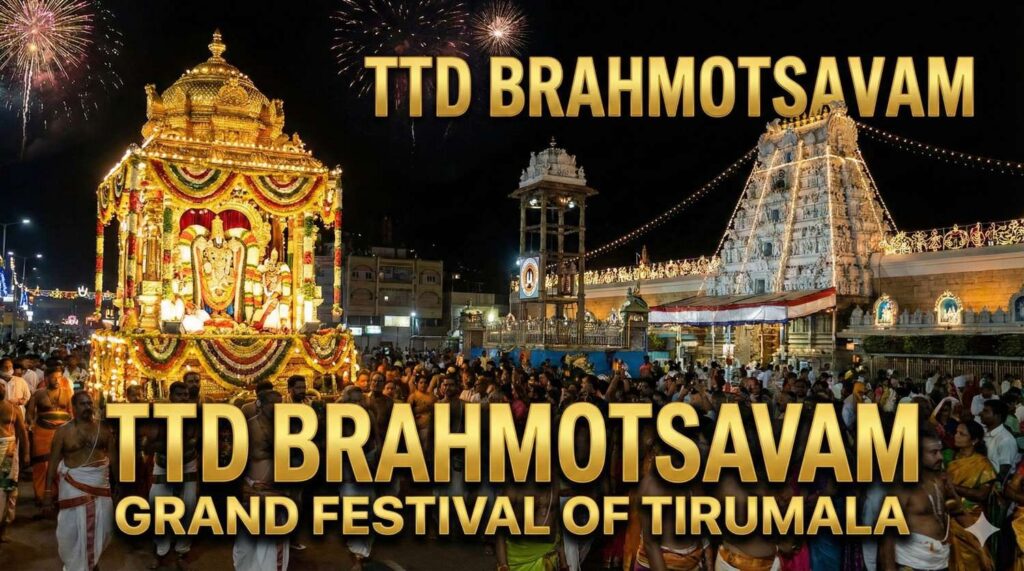
The celebration usually happens for nine days and includes more than 20 major rituals, four main vahana sevas, and several special darshan opportunities. Devotee participation crosses several lakhs each day, especially during Garuda Seva, which is one of the most spiritually powerful events of the festival. The festival happens twice every year. The main one is Salakatla Brahmotsavam, and the second one is Navaratri Brahmotsavam.
During Brahmotsavam, the entire Tirumala Hills glow with lights, flowers, devotional music, and spiritual energy. Temple streets become full of devotees chanting the name of Lord Venkateswara. Special decorations, traditional music groups, and thousands of volunteers work together to make the event smooth.
This article explains A to Z information about TTD Brahmotsavam, including history, timings, significance, sevas, booking steps, crowd guidelines, numerical data, accommodation, travel tips, and important instructions for all pilgrims.
Guruvayur Temple Darshan 2025: Aarti, & Pooja Timings
Historical Importance and Meaning of Brahmotsavam
Brahmotsavam has been celebrated for more than 1,000 years at the Tirumala Temple. According to ancient scriptures, Lord Brahma wanted to thank Lord Venkateswara for helping restore balance in the universe. Because of this, the festival is called “Brahma’s Utsavam,” which later became Brahmotsavam.
The significance of Brahmotsavam is connected with dharma, cosmic balance, and blessings for the world. Every ritual performed during these nine days is believed to bring peace, prosperity, and spiritual protection. In the past, kings from the Vijayanagara Kingdom supported this celebration and helped expand its traditions. Historical records show that large crowds have been attending Brahmotsavam for more than 600 years.
The festival also symbolizes the journey of Lord Venkateswara among his devotees. During Brahmotsavam, the deity is taken out of the temple on beautifully decorated vahanas, each representing an element of nature or a divine vehicle. For example, Garuda Vahana represents strength and protection, Hanumantha Vahana symbolizes devotion, and Gaja Vahana stands for royal power.
Today, Brahmotsavam brings together people of all ages, cultures, and regions. It is a period of positive energy, chanting, music, and spiritual celebration. Many devotees believe that witnessing even one day of Brahmotsavam removes negative karma and brings special blessings to their families.
Brahmotsavam Dates, Timings, and Daily Ritual Schedule
Brahmotsavam is celebrated for nine days, and every day has a special ritual conducted at specific timings. The festival usually happens in the months of September or October, but the exact dates depend on the Hindu lunar calendar. The daily events begin as early as 3:00 AM and continue until late night around 11:00 PM.
A typical Brahmotsavam schedule includes:
• Dwajarohanam on Day 1 at around 6:00 PM
• Vahana Sevas every morning and evening
• Pedda Sesha Vahanam, Chinna Sesha Vahanam, Hamsa Vahana, Simha Vahana, Muthyala Pallaki, and others
• Garuda Seva on Day 5, the highest crowd day
• Golden Chariot Procession
• Snapana Tirumanjanam
• Chakrasnanam on the final day
Approximately 35 to 40 rituals happen during the entire festival. On Garuda Seva day alone, more than 3 to 5 lakh devotees visit the temple. Crowd management becomes very tight, and queue lines may take several hours.
Timings of major events:
• Morning Vahana Seva: 7:00–10:00 AM
• Evening Vahana Seva: 7:00–10:30 PM
• Suprabhatam: 3:00 AM
• Thomala Seva: 4:00 AM
• Ekantha Seva: 11:00 PM
Visitors are advised to check official announcements for updated timings each year.
Types of Vahana Sevas and Their Symbolic Meaning (200+ words)
During the nine days, Lord Venkateswara is taken on different vahanas, each carrying a special meaning. There are more than 15 vahana sevas in total. Every vahana teaches a spiritual message while blessing the devotees.
Major Vahana Sevas:
- Pedda Sesha Vahanam – Represents cosmic energy and divine protection.
- Chinna Sesha Vahanam – Symbolizes spiritual continuity.
- Hamsa Vahanam – Represents purity and wisdom.
- Simha Vahanam – Symbolizes courage and strength.
- Muthyala Pallaki – Decorated with thousands of pearls.
- Kalpavriksha Vahanam – Represents wishes being fulfilled.
- Sarvabhoopala Vahanam – Symbolizes power over the universe.
- Garuda Vahanam – The most famous; attracts lakhs of devotees.
- Hanumantha Vahanam – Represents devotion and loyalty.
- Gaja Vahanam – Symbolizes royal power.
Each vahana route covers around 2–3 kilometers around the temple streets. Thousands of volunteers, police officers, and TTD staff help manage the crowd. The vahanas are decorated with hundreds of kilos of flowers, special lighting, and traditional music bands.
Garuda Vahanam is the highlight of the festival. On this day, devotees wait for 8–10 hours just to watch the deity. The spiritual atmosphere becomes powerful with chanting and prayers echoing across Tirumala.
Darshan Types Available During Brahmotsavam (200+ words)
During Brahmotsavam, several darshan types are provided for devotees. However, crowd levels reach their peak, so darshan timings can be longer than usual. The temple sometimes limits certain darshan categories to control the crowd.
Main Darshan Options:
• Sarva Darshan – Free entry; waiting time may exceed 10 to 15 hours.
• Special Entry Darshan (₹300) – Available on limited days; booking needed through the official website.
• Divya Darshan – For pilgrims who walk via Alipiri or Srivari Mettu; waiting time can be 6 to 12 hours.
• VIP Break Darshan – Only for protocol officials or donors.
Due to the heavy rush, TTD may temporarily suspend special darshan categories on Garuda Seva day. Devotees who want a smooth experience should book well in advance and avoid peak days.
Brahmotsavam also includes special sevas:
• Arjitha Seva
• Sahasra Deepalankara Seva
• Snapana Tirumanjanam
However, many sevas remain cancelled during festival days to manage the crowd. Devotees need to check announcements when booking online.
How to Book Darshan, Sevas, and Tickets for Brahmotsavam
TTD provides online booking for darshan tickets, accommodation, and certain sevas. Booking opens around 60 to 90 days before the festival and gets filled quickly because of high demand. More than 5 lakh bookings get processed within a few hours when slots open.
Steps to Book Darshan/Sevas:
- Go to the official TTD online portal.
- Create a user account using your mobile number and email.
- Choose “Darshan,” “Accommodation,” or “Seva.”
- Select the date of Brahmotsavam day.
- Choose a time slot if available.
- Upload ID details for all devotees.
- Pay using debit card, net banking, or UPI.
- Download and print the confirmation receipt.
Pilgrims must carry ID proof matching their booking. Children below 12 years do not need a separate ticket.
Offline booking counters are available in Tirupati, but due to heavy rush, most tickets are already filled online. For Divya Darshan, there is no online booking; devotees must walk via Alipiri or Srivari Mettu to get tokens.
Crowd Management, Security, and Safety Information (200+ words)
During Brahmotsavam, daily crowd numbers reach 5 to 6 lakhs, especially on Garuda Seva day. Because of this, TTD uses a layered queue system with barricades, security checkpoints, and volunteers. More than 10,000 staff members from police, TTD security, and volunteers assist during the festival.
Safety instructions include:
• Always follow queue lines and do not attempt shortcuts.
• Maintain hydration and avoid rushing, especially elderly devotees.
• Free drinking water, medical camps, and emergency services remain available 24 hours.
• Lost and found counters help identify missing items or lost people.
TTD also arranges:
• Special medical units with doctors
• Ambulances stationed near main points
• CCTV monitoring across key areas
• Public announcement systems in multiple languages
Crowd levels peak at night events. Families with children or seniors should plan morning darshan. Police may close certain routes during processions to avoid pressure from crowds. Every devotee is requested to remain patient, as festival days naturally attract large gatherings.
Accommodation and Facilities During Brahmotsavam (200+ words)
TTD provides more than 20,000 rooms across Tirumala and Tirupati. However, on Brahmotsavam days, rooms get booked within minutes. There are free dormitories, paid cottages, guest houses, and VIP cottages managed by TTD.
Accommodation Types:
• Free Dormitories – Large halls; mats provided.
• TTD Rooms – ₹100 to ₹2000 depending on type.
• Suites and Cottages – ₹1000 to ₹5000.
• Private Hotels in Tirupati – ₹800 to ₹4000.
TTD also provides free facilities:
• Annaprasadam – Free meals for lakhs of devotees daily.
• Drinking water – Purified water at multiple points.
• Luggage counters – Safe deposit of belongings.
• Free bus service within Tirumala.
Restrooms and bathing facilities operate 24 hours during festival days. Devotees should book accommodation early or stay in Tirupati if Tirumala rooms are unavailable.
Important Instructions, Dress Code, and Do’s & Don’ts
TTD follows a strict dress code:
• Men: dhoti, kurta, pancha, pyjama
• Women: saree, salwar kameez, half-saree
Mobiles may be restricted in certain areas during sevas. Photography is strictly prohibited inside the temple. Devotees must avoid carrying large bags, food items, and metals.
Do’s:
• Keep your ID proof and booking receipts.
• Stay hydrated and carry basic medicines.
• Use drinking water booths and follow hygiene practices.
• Help senior citizens, children, and first-time visitors.
Don’ts:
• Do not push or create crowd pressure.
• Avoid buying tickets from unauthorized persons.
• Do not bring alcohol, tobacco, or sharp items.
• Avoid littering; use dustbins provided.
TTD also encourages devotees to maintain silence in temple areas and follow spiritual discipline. Pregnant women and elderly persons should avoid heavy queues on peak days.
Cultural Significance, Blessings, and Spiritual Benefits
Brahmotsavam is not just a festival; it is a complete spiritual experience. The scenic beauty of Tirumala, the rhythmic chanting of “Govinda,” the sound of traditional drums, and the decorated vahanas create a divine atmosphere. Many devotees believe that attending Brahmotsavam wipes away negative karma and brings blessings equal to visiting the temple for several days.
The festival highlights the divine journey of Lord Venkateswara among his devotees. Each vahana tells a story of cosmic balance, dharma, and divine protection. Lakhs of people watching the procession together creates a unity of faith.
Families consider Brahmotsavam an auspicious time for prayers, donations, and beginning new activities. Many people perform vows, tonsure rituals, and special offerings during these days. The spiritual power felt during Garuda Seva is considered one of the strongest devotional experiences at Tirumala.
Overall, Brahmotsavam is a celebration of devotion, tradition, music, art, culture, and unity. It reminds every devotee that God walks among His people, listens to their prayers, and blesses them with strength, health, and prosperity.