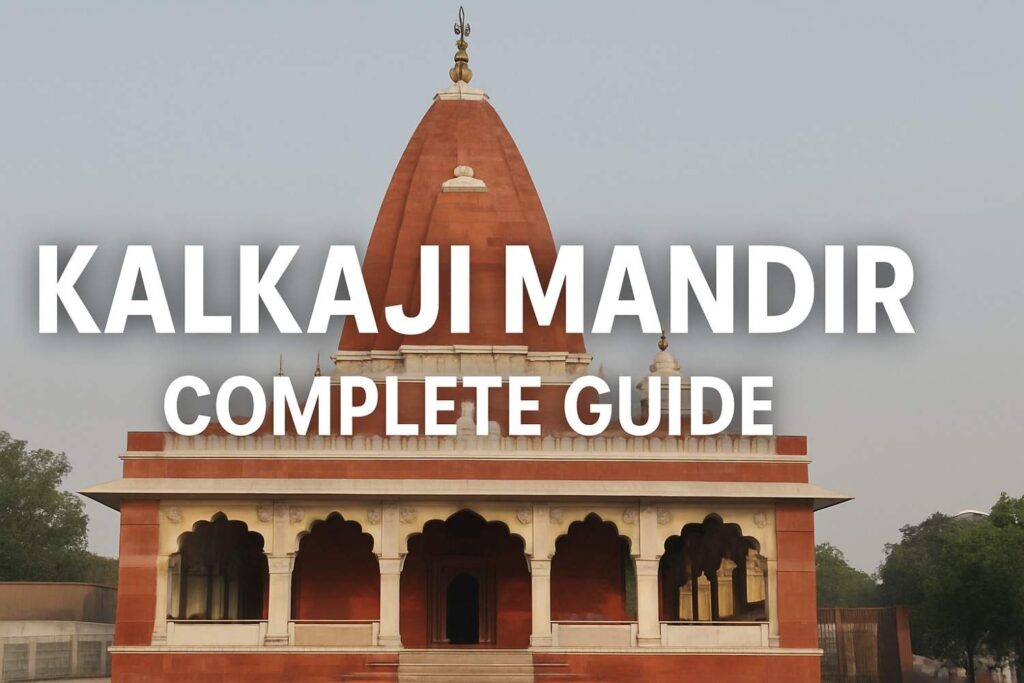
Shri Kalkaji Temple known as Kalkaji Mandir is one of the oldest and the strongest temples in Delhi. The temple is devoted to Maa Kali worshipped in this place as Kalka Devi. People assume that this temple is over 3,000 years old, and some literature reports that it is even older. It is situated in South Delhi, close to the renowned area in South Delhi, Nehru Place.
The temple is reputed to have a powerful spirituality. According to devotees, everything you desire in this world when you make your wish with a pure heart comes true. Each day thousands of people come to the temple, and the figure grows even greater during festivals. Approximately 25,00040, 000 worshippers go there weekly in normal months. The attendance of this event at Navratri can go up to 7-8 lakh visitors in nine days.
Of particular significance is the fact that Maa Kalka is supposed to have been a self-manifested goddess. The believers suppose that the idol was not created by human hands, but it emerged on its own. The sanctum also has a small black stone image representing the goddess in the main sanctum. Human beings worship this form because it is the accomplish of negativity and is the bringer of power. Kalkaji Mandir is conveniently located with easy access via roads and metro as well as it is open every day. The temple environment is replete with chants, bells and incense smell. It is a destination that people visit with optimism, devotion and strong faith.
TTD Thomala Seva: Rules, Booking, and Darshan Experience – 2025
History of Kalkaji Mandir
This temple has a long history behind its back. The first to be cited are ancient Hindu writings. Historians presume that the temple may predate the Mahabharata era, that is, it is more than 3,000-5,000 years old. The Pandavas and Kauravas are said to have worshipped there. In the 18th century, the Marathas and the local rulers rebuilt parts of the temple. In 1764, a part of the large structures was restored in the temple. The immediate surroundings structures were later enhanced by the local worshippers in the 19th and early 20th century.
Legends show that Maa Kalka came here to kill demons who were bothering sages in the region. The sage family went through penance of 108 days and the goddess came and killed the demons. Due to this story, there are several rituals in the temple that have numbers that are multiplied by 108 like 108 diyas, 108 names of the goddess, and 108 parikramas on special vrata days. There are numerous transformations of the temple, which have passed through thousands of years. Nevertheless, the initial holy place and the idol still are the same. That is why, devotees have a strong spiritual attachment as they come.
Architecture and Structure
The architecture of Kalkaji Mandir is simple but full of symbolic meaning. Some important features include:
- Main sanctum: A small octagonal room where the main idol is placed.
- Courtyard: A wide open area where devotees gather, especially during Navratri.
- Pillars and small shrines: Several smaller temples surround the main shrine.
- Steps and pathways: Around 50–60 steps lead to the main sanctum depending on which side you enter.
- Red and white stones: The walls are mostly red sandstone and white marble.
- Continuous aarti flame: A sacred flame burns 24 hours a day inside the temple.
The temple also has a long corridor for parikrama. Some devotees complete 3 rounds, while others do 11, 21, or 108 rounds based on their belief.
The complex spreads across 5–6 acres, making it one of the larger temple grounds in Delhi.
Religious Importance of Kalkaji Mandir
Kalkaji Mandir is considered one of the most powerful Shakti temples in North India. Maa Kalka is believed to be the 10th form of Goddess Durga. People come here to seek blessings for:
- mental strength
- financial stability
- protection from problems
- success in education
- marriage and family life
- removal of negative energy
Many devotees say that visiting the temple on Tuesday, Friday, or Ashtami day gives special blessings. During Navratri, the temple becomes one of the busiest Shakti Peeth-like places in Delhi.
Another important belief is that the goddess fulfills wishes quickly. Many people tie small red cloths or threads near the shrine as a sign of their prayer. They come back and untie it when their wish is fulfilled.
The temple also plays a role in community activities. Free food (langar) is arranged during special festivals where nearly 5,000–10,000 devotees are fed in a single day.
Daily Rituals and Timings
Kalkaji Mandir follows a strict schedule of rituals. Timings may change in summer and winter, but the usual pattern is:
Temple Timings
| Category | Details |
|---|---|
| Morning Opening | 4:00 AM |
| Morning Aarti | 4:30 AM |
| Darshan Hours (Morning) | 5:00 AM to 11:30 AM |
| Afternoon Break | 12:00 PM to 3:00 PM |
| Evening Darshan | 3:00 PM to 10:30 PM |
| Night Closing | 11:00 PM |
| Mangal Aarti | At sunrise |
| Bhog Offering | 12:00 PM |
| Evening Aarti | Around 7:00 PM |
| Shayan Aarti | Before closing |
| Festival Hours | Temple may remain open for 18–20 hours |
Kalkaji Mandir Crowd Levels
| Day Type | Approx. Visitors |
|---|---|
| Normal Days | 10,000–15,000 |
| Weekends | 20,000–30,000 |
| Navratri Days | Up to 1,00,000 per day |
Navratri Celebrations
Navratri is the most important event in Kalkaji Mandir. Both Chaitra Navratri (March–April) and Sharad Navratri (September–October) attract huge crowds.
Key Highlights
- The temple stays open for almost 20 hours daily.
- Special bhajans continue for 9 days.
- More than 500 extra volunteers join for crowd management.
- Around 5–8 lakh devotees visit throughout the festival.
- Long queues stretch for 1–2 kilometers on peak days.
During Navratri, devotees perform Kanjak Puja, light 108 diyas, offer sweet halwa, and perform continuous chanting of Maa Kali’s name. The energy in the temple is strong, and many people visit again every year because they feel blessed after coming.
How to Reach Kalkaji Mandir
The easiest way to reach Kalkaji Temple is by metro.
Kalkaji Mandir Metro Station is the nearest stop, around 1 km from the temple.
If you’re coming by your own vehicle, parking was earlier available near the temple, but now it has been closed. Visitors are asked to park at the Lotus Temple parking area instead.
Temple Entry Gates
There are three main gates for devotees.
Currently, entry for the general public is allowed from Gate No. 4 on the temple complex side.
The gate shown in the video is Gate No. 2, also known as Ram Gate.
Prasad and Offerings
Outside the temple, you’ll find many stalls where you can buy items to offer at the temple, such as:
- Rose flowers
- Coconut
- Chunri (scarves offered to the Goddess)
- Malai (cream)
You will also find laddu prasad counters. The prices were:
- ₹50
- ₹150
- ₹300
You can offer these laddus to the Goddess as well.
Footwear Deposit (Joda Ghar)
Near the main gate, you’ll find a joda ghar (shoe deposit center).
They were charging ₹5 per pair.
You must leave your footwear here before entering the temple.
Temple Timings
The temple remains open throughout the year and never closes completely.
During Navratri, the temple stays open 24 hours.
However, there are two short breaks:
- 11:30 AM to 12:00 PM – closed for bhog
- 3:00 PM to 4:00 PM – closed for cleaning
Plan your darshan accordingly
Significance of the Temple
The temple is also known as a Manokamna Siddh Peeth, which means a sacred place where wishes are fulfilled.
Devotees believe that sincere worship here brings:
- Success
- Prosperity
- Happiness
- Fulfillment of desires
Navratri Arrangements
The preparations for Navratri start a day before.
Most decorations are completed at night, and the temple becomes fully active from the next morning.
Special pathways are created to manage the heavy flow of people. Barricades and lines are set up so devotees can move in an orderly manner.
Visit to Bhairav Temple
After visiting the main temple, devotees usually visit the Bhairav Temple, located nearby.
The video ends with darshan of the Bhairav Mandir as well.
Things to Do Inside and Around the Temple
When you visit Kalkaji Mandir, you can spend time in several peaceful or important spots.
Inside the Temple
- Offer flowers, coconut, and prasad
- Light a diya or incense stick
- Walk the parikrama path
- Sit near the courtyard for meditation
- Attend morning or evening aarti
Around the Temple
There are many interesting places nearby:
- Lotus Temple (Bahá’í House of Worship) – 1 km
- Nehru Place market – 500 meters
- Iskcon Temple Delhi – 2 km
- Okhla Bird Sanctuary – 4 km
- Deshbandhu College area food lanes – 1 km
Many visitors enjoy spending time around Lotus Temple and ISKCON Temple after visiting Kalkaji.
Important Tips for Devotees
Here are some useful tips that make your visit easy and comfortable:
Best Time to Visit
- Early morning between 4 AM to 7 AM
- Weekdays are less crowded
- Avoid peak hours during Navratri unless prepared for long lines
Dress Code
There is no strict code, but modest and comfortable clothing is suggested.
Prasad and Offerings
- Common offerings include coconuts, red chunri, flowers, and sweets.
- Prasad shops open from 4 AM near the entrance.
Safety Tips
- Keep your belongings secure.
- Follow queue lines properly.
- During festivals, stay hydrated as waiting times may go above 1 hour.
Wheelchair Access
Some areas are accessible, but the main sanctum has steps. Assistance may be required for elderly devotees.